Content
Our Money, Their Monopoly: How Corporate Welfare Exploits Miami Renters
Executive Summary
Developers and politicians propose that we can build our way out of the housing crisis and provide more incentives to the real estate sector. This report argues differently, and documents the impact of corporate landlords on low-income tenants living in subsidized multifamily housing. We asked tenants about their most pressing concerns, the quality of their housing, and their relationship to often faceless landlords.
PRESS
Forge Organizing
Using Participatory-Action Research to Explore New Campaign Strategies in Red-Trifecta Florida
–––––––––
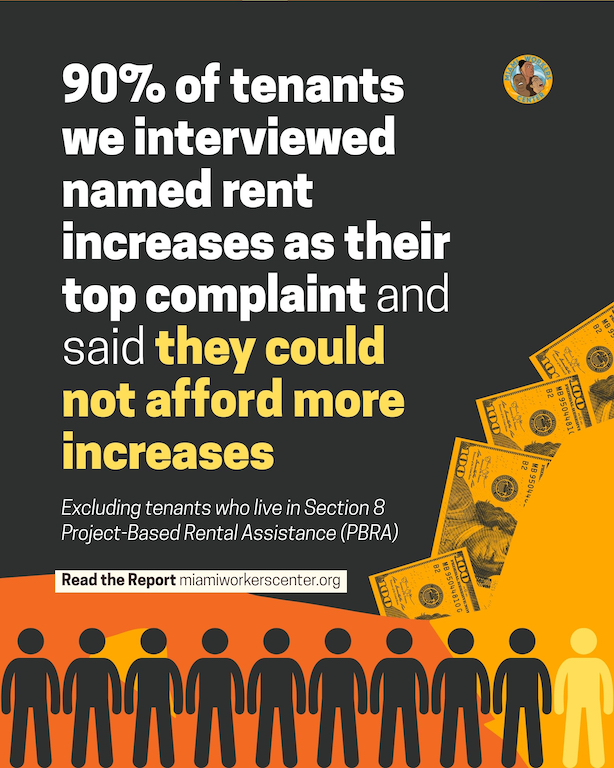
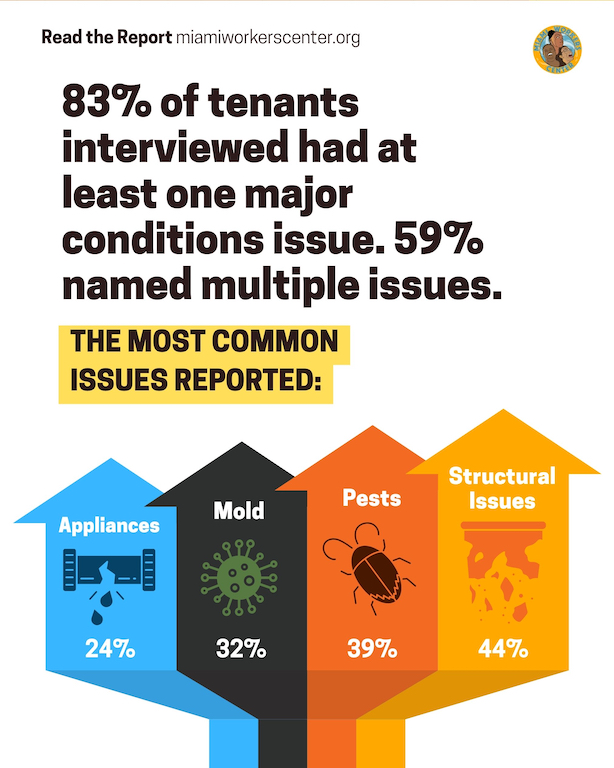
The post-COVID 19 pandemic housing landscape has normalized a nearly 40 percent increase in the cost of rent in Florida and a higher concentration of large corporate entities such as private equity firms buying up multifamily properties. Housing is the most costly expense across Miami-Dade. Miami-Dade County has the largest share of the state’s low-income renters. There are over 490,000 renter households in the county, and 27 percent of those are low income, making less than $60,000 per year. These households are also cost-burdened, meaning they pay more than 40 percent of their income toward rent. While landlords make tens of millions in rent income, we found that some spend pennies on maintenance while pocketing the rent dollars that tenants struggle to put together every month.
Thirteen years ago, Power U Center for Social Change released State of Miami Renters, a report that illustrated many of the challenges tenants continue to face today in Miami-Dade County’s low-income and predominantly Black and Immigrant neighborhoods: a shortage of affordable housing, widespread slum conditions, and limited legal protections. These problems have become only more acute since then.
Developers and politicians propose that we can build our way out of the housing crisis and provide more incentives to the real estate sector. Instead, we directed our attention toward tenants: How have unaffordability, corporate ownership, and subsidies impacted them? We asked tenants about their most pressing concerns, the quality of their housing, and their relationship to often faceless landlords.
This report sheds light on the systemic housing injustices that tenants in Miami endure. We want tenants to know they are not alone. Their experiences are not isolated. Tens of thousands of others are living the same reality. We invite tenants to use this information to get organized, take action, and demand housing in Miami that is safe, accessible, and affordable for all.
Español | Kreyòl Ayisyen